
How Do I Know If My Flashing Needs Repair?
roof decking Tacoma, damaged decking WA, roofing structure Tacoma
You’re outside after one of those windy Tacoma rainstorms, doing a quick check around the yard, when you glance up and notice something odd — a thin strip of metal around the chimney looks bent or discolored. Maybe it’s even starting to lift at the edge. That piece of metal is your roof flashing, and if it’s not doing its job, leaks won’t be far behind.
At Robb’s Roofing, we see flashing problems more often than you’d think. It’s one of those roof parts most people don’t notice until water starts dripping inside. The good news is that catching it early can save you from much bigger repairs later on.
What Flashing Actually Does
Flashing is the unsung hero of your roof. It’s the thin metal that seals the areas where shingles meet something else — like chimneys, skylights, roof valleys, and vent pipes. Its whole purpose is to keep water from sneaking in at those seams.
When flashing comes loose, rusts through, or loses its seal, water can slip right under the shingles and into the wood below. Even a tiny gap can cause slow leaks that show up weeks or months later as ceiling stains or soft drywall.
Quick Guide
Quick answer: Loose, rusted, or missing flashing around chimneys, vents, or skylights.
Try this: Inspect flashing after storms and reseal small gaps with roofing cement.
Stop signs: Gaps wider than ¼ inch or visible rust holes.
Typical cost: Flashing repair runs about $300–$900, depending on roof layout and materials.
Common Flashing Problems in Tacoma
Tacoma’s mix of wind, rain, and salt air can be rough on flashing. Over time, that constant moisture causes metal to rust, caulking to crack, and nails to loosen. When the wind picks up, rain can drive right into those weak spots.
You might notice:
- Rust or discoloration on metal edges.
- Lifted corners or missing sealant around chimneys and vents.
- Small gaps where flashing meets brick or siding.
- Water stains on ceilings after heavy storms.
These are early warning signs that water’s getting closer than it should.
How to Check It Safely
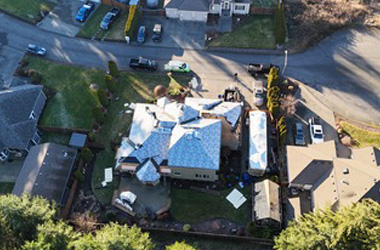
If you can do it safely from the ground or with binoculars, look for anything that looks out of place — bent edges, cracks, or missing caulk. Avoid climbing up if the roof is wet or steep. After a windstorm, it’s worth having a professional inspection just to make sure everything’s still sealed tight.
A roofer can reseal small sections with roofing cement or replace damaged flashing altogether. It’s a quick, straightforward fix when caught early, but if you wait too long, it can lead to wood rot or mold inside your attic.
How Robb’s Roofing Handles Flashing Repairs
When you call Robb’s Roofing, we don’t just patch what’s visible. We check the surrounding shingles, the underlayment, and the seals around chimneys and vents. We use rust-resistant flashing designed for Tacoma’s wet climate and seal everything to handle the next big storm.
Call Robb’s Roofing at (253) 820-2163 for a thorough flashing inspection in Tacoma. We’ll make sure every seam, vent, and chimney stays watertight — no matter how many rainy days come your way.